Hitashya’s Visual Lexicon and Symbols
༄
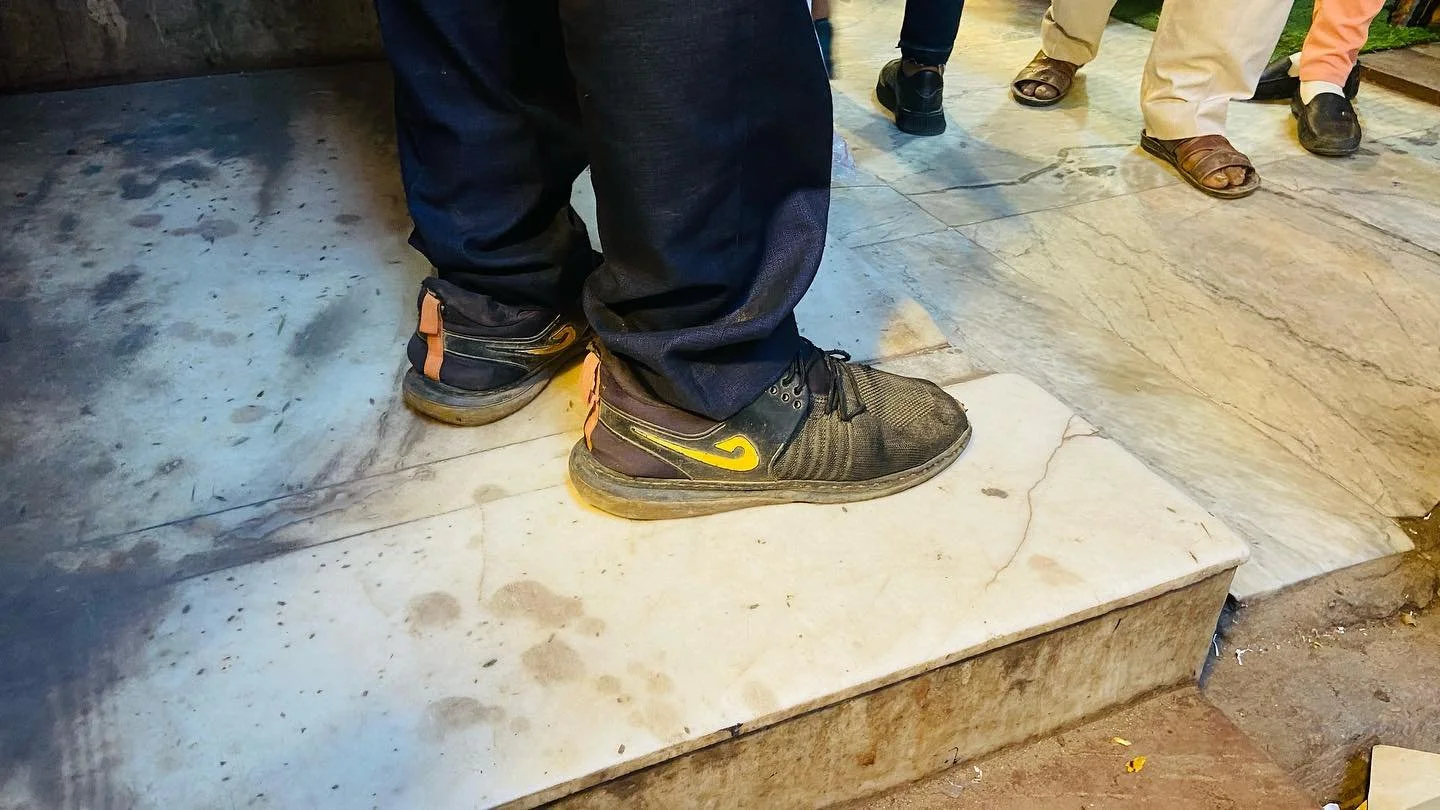
I first encountered my primary symbol for Hitashya, the “semi-spiral swoosh”, as a bootleg Nike logo in Chinatown, New York around 2012. Bootleg brands were everywhere in New York at the time, and many of us in the NY scene were using bootleg language of our own for projects.
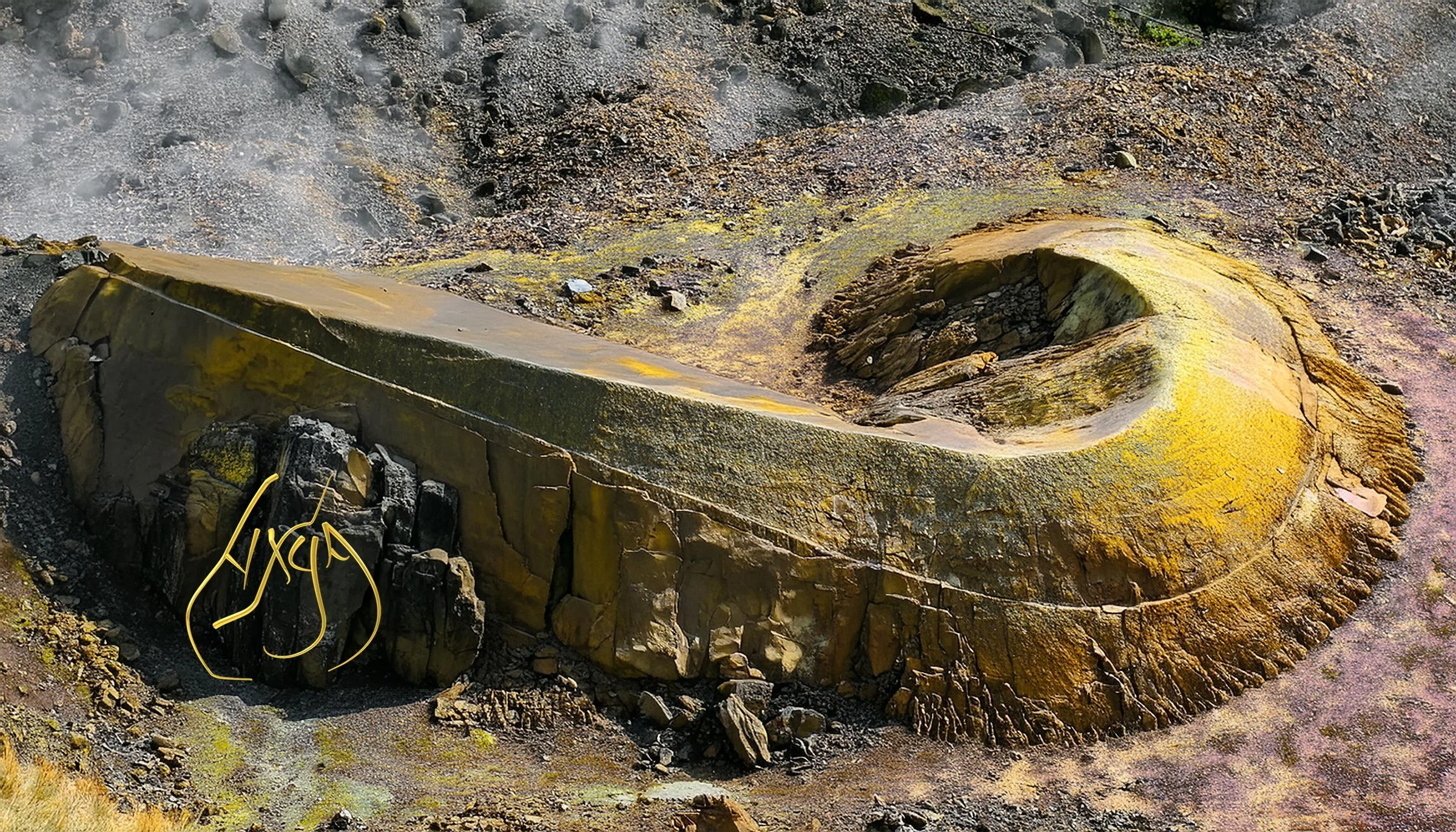
As I traveled more and more, I began to see the bootleg swoosh everywhere, and realized the genius of it, as it references ancient symbols across many non-Western cultures. You’ll see a version of it in Kundalini and Tantric practices, in Tibetan and Nepalese manuscripts; in India and China as a “sacred flame” or even the “smokeless flame”; a conch shell blown at the start of an official decree; a sacred breath or cosmic wind; a cosmic serpent or the beginnings of a spiral. This mark had become a compass, leading me toward other histories, aesthetics, cosmologies, and ways of understanding the world—a way to jailbreak my mind, but also tap deeper into the body.
The form itself evokes something elemental: vertically it resembles a forming spiral or current of energy moving upward (Kundalini?), a flame or smoke ascending toward the sky, an inhale and exhale…Horizontally, it’s like a freestyle flow of wind, a breath taken and released into a new state of being (with smoke?), a bold movement taking shape with action—the first momentum before something unfolds…and rather than moving rigidly, it “unleashes” or “strikes” with a mix of primal, muscly aggression and curly, charming soft power (my fav combo).
Nike’s original motto, “Just Do It”, took on other contexts with the bootleg symbol, as it appeared to me in a time when I was a bit conceptually exhausted in the art and online world—fleeing back to music and holistic health and movement practices to “just feel it”. I looked to this symbol to just start projects and get things done intuitively, including music, which I felt myself transitioning back to. I was also toying with was the idea of leaving New York and becoming full-time nomadic.
Finally, in 2017, I “Just Did It” and took the plunge, moving my primary bases around Europe and Asia, and finally to India, all places where I encountered this symbol or its likeness so many times. Every time it appeared, it seemed to be showing me new traces of codes, paths and cultures yet unknown…showing me the world was wider and deeper, always full of other worlds. The athletic instigation of Nike became a deeper kind of athleticism and movement—both in maneuvering new worlds and cultures, and in tapping into something primal, new and energetic in myself. I was also training a lot just to be in shape enough to do all this travel by myself…and I was finally finishing some new musical compositions, which was very much the flex of a new muscle.
In Bombay, just like in certain pockets of New York, the bootleg had more cultural relevance and dominance than the allegedly larger reference. I also see this symbol in Thailand, Nepal, UAE, Egypt and throughout street culture in Europe. I’m sure it’s everywhere because global cultures are everywhere, but it has a distinctive ancient and “Eastern” imprint.
In global culture, a similar shift was occurring and growing. The 2010s-2020s saw many people leaving the West to “return” to the homeland of their parents or grandparents in something called “Reverse Brain Drain”, which had been happening since the 90s. It saw a boom in the amount of people moving and traveling to Asia and Africa, the source cultures of the world. At the same time, it saw a boom in multi-generational immigration and diaspora. Those who had come to other countries in the 70s-2000s now had children who were grown up and entering the cultural arena in a new way, as a new wave of “hybrids”, “Third Culture Kids” and “Fourth Culture Kids”, etc. who were and are moving between cultures and worlds in an unprecedented way.
It saw a change in global music, with rappers like Ghali admitting that his local scene stopped aping Western trends and started making their own, uniquely multicultural new Italian sound, with lyrics in Italian, Darija and more. Music scenes across “Global Southern” countries and their diasporas were trending and dominating the global arena in a newly exponential way, and access was expanding. The music scene in Paris was reflecting its wider range of ethnicities and contemporaneities. “World Music” was not just some category of folk music from a vague elsewhere anymore—it was globally dominant, genre-blending and intercultural pop, often created by independent artists, in newly dominant global hubs like Nigeria.
Globalism is not new but in the 2010 and 2020s the waves of globalized internet, access, immigration, supply chains, social networks, trade and all their mobilities have reached and fundamentally changed the core systems in countless ways. Hegemonies from the last 50-100 years are dissipating. Diljit Dosanjh playing Lollapalooza in 2024 is a perfect example of this. As is everyone on this list.
This is something I define with “New World”, a name I use for the genre and era we are in, culturally. This Hitashya symbol is, to me, one symbol of the New World wave which I followed and rode into a completely new global understanding, although one that also feels more inherent to who I am and what I’ve always been interested in. Something we’ve been severed from. This wave was largely accessed via music before it became geographical relocation. And it took a lot of muscle and flow to ride.
༄ has come to embody a lot of things for me, including New World Culture and other-world hybridity: a texture of Post-Western cultural expansion and radical acceptance in which our codes of reference widen; inherited centers of authority shift; new access provides new audiences, archives and independent modes of production; and new forms/crafts/identities emerge through authentic and pluralized experience. As New World Artists & Musicians we take our input from everything in our own multi-faceted lives—subcultures, pop cultures, world cultures, ancient cultures…scenes from 20 years ago or 20 years ahead.
In my own life this also includes an acceptance of wider understandings of health and intuition, of music and art, culture and ceremony, etc. etc. It involves an equal interest in heritage and the contemporary, as well as a constant understanding of expansion and plurality, as well as the idea of “unearthing” things that have been lost in cultural blind spots or historical erasure.
Plenty of other people are writing about this Post-Western and multi-polar shift, which only gained steam after the CoVid years of 2020. It’s also touched on in the growing field of futures thinking and in ideas like New Earth and the “New World Order” (not the conspiracy theory). You’ll see a lot of people talk about a “new world” in these post 2010s years. Again, not a new phenomenon but one that has caught fire in new contexts, especially with de-colonial support.
The symbol is an invitation to explore our truly endless world—its wider histories, futures and ways of seeing—beyond the bubble surrounding you. Jailbreak yourself! Jump into the fire and the field.
Beyond this, its overlapping elemental meaning is also about tapping into a deeper, truer source and intention behind beginnings and flows. Deeper into the body and soul. For me, after many years in a conceptual chokehold with my art practice, Hitashya was and is one of my projects where I’m free to truly make things from a wilder place. Music is a more spiritual container. My primary medium. A ritual. An arena of music videos. A place to embody my voice and just…make music like I always have! And also…a place to party and just co-exist.